
Workshops on Personal Status Law and human rights have inspired young lawyers to launch local awareness meetings and TikTok campaigns, demanding fairer legislation on issues such as divorce, child support and custody.
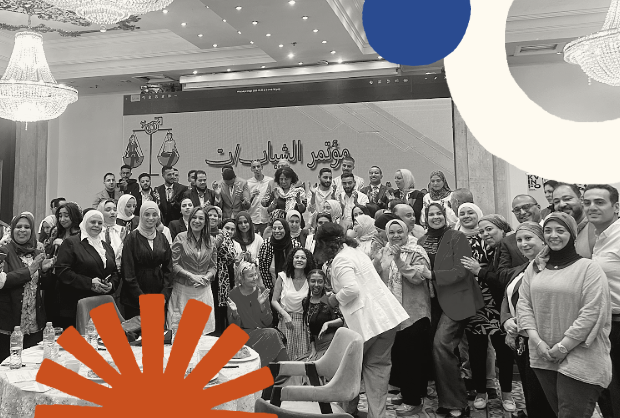
The morning begins with warm hugs, laughter and selfies. Groups of young people gather to share stories, creating a summer camp atmosphere as they settle around neatly laid conference tables.
“There are young people here from so many different parts of Egypt that I now know. It’s just wonderful to see everyone again,” says Yasmen Ahmed, waving to a group of young men and women entering from the far end of the room.
She is a recent graduate and one of many law students and young lawyers who, over recent months, have attended three- to four-day workshops on gender equality, human rights and the practical workings of Egypt’s Personal Status Law. Today, they are meeting for a conference on the role of youth in improving the Personal Status Law in Egypt.
Unfair to Both Women and Men
“These workshops gave me so much motivation. Before, I thought about how my mother and other women received little recognition for raising the next generation, but I probably also believed that women demanded too much. Here, I learned that what they ask for are basic rights – and that it’s not a threat to men’s rights, but the opposite,” explains Angelo Svafat.
He has just completed his law degree and is now training at a law firm.
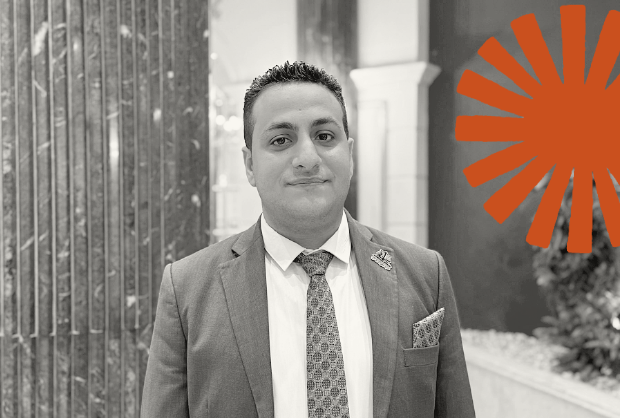
For Angelo, the workshops were an eye-opener. He now sees the inequalities and gaps in the legislation and often discusses them with colleagues at his firm.
Yasmen Ahmed had a similar experience: “I come from a rural area and was raised to believe that men are always right and women should never question them. Feminism seemed rebellious and extreme. But through this training, I understood that it’s about justice and equal rights,” she says.
CEWLA’s Work on the Personal Status Law
Egypt’s Family Law – or Personal Status Law – regulates many issues including marriage, divorce, custody and guardianship.
For years, CEWLA has worked to improve this legislation at multiple levels – from legal counselling and support services to political advocacy and campaigns with other organisations.
The organisation has drafted a comprehensive proposal for a new Personal Status Law promoting gender justice and persuaded MPs to collect signatures for parliamentary debate.
CEWLA has also built alliances with key actors – from religious leaders and decision-makers to 125 local and national NGOs – to spread awareness and support for its draft law.
The challenge in late 2025 is that, although MP Nashwa el Deeb gathered enough signatures to trigger debate, the proposal remains blocked. If she is not re-elected in Egypt’s November 2025 parliamentary elections, efforts to bring the draft to parliament must start over.
The debate on Personal Status Law is highly contentious and a battleground for societal values. Powerful conservative and religious groups hold firm positions, while feminist organisations push in the opposite direction.
“In Egypt, our Personal Status Law is unjust for men and women – and especially for children caught in the middle. For example, fathers rank fourteenth in the custody hierarchy, and women face enormous challenges in securing financial support and child support after a divorce.”
‘We Need a Generation That Understands the Issues’
The law students and young lawyers come from across Egypt – from faculties in Cairo and Alexandria to the more conservative Minya University in the south.
The training was organised by the Egyptian organisation CEWLA, which has long worked to improve the Personal Status Law. Today, CEWLA has brought together young people, researchers, activists and policymakers working on gender equality and questions related to Personal Status Law for a conference to exchange experiences and strategies.
For decades, CEWLA’s legal counselling has revealed how outdated and discriminative rules harm women, men and children. The organisation stresses that reform should not remain a closed conversation among established NGOs, but must involve youth and their perspectives.
“Young people are crucial for the future. If we want to improve legal practice – and eventually legislation – we need a generation of lawyers who understand gender justice and the issues with the Personal Status Law. Now we have a network of passionate young people across the country who want change,” says Gawaher el Taher, CEWLA’s project lead on youth engagement and Personal Status Law.
Not Like Law School
For Rehab Nasser, 25 and still a law student, CEWLA’s training was completely different from the university.
“At the workshops, we studied case law and learned about both the legal texts and actual court procedures, which are nothing like the books. It was about real-life experiences. The sessions helped me see how legislation fails women, especially in divorce and child support cases. It was about empathy, rights and understanding – not just legal definitions.”
Angelo Svafat agrees: “The workshops gave us perspectives far beyond theory. Meeting students from other regions was also invaluable. We shared how concepts from the Personal Status Law are interpreted differently across Egypt – and saw how misinterpretation can ruin lives. In some places, divorce is viewed so conservatively that a woman can be marked as a ‘rebellious woman’, left isolated and stigmatised.”
Legislative Change Could Take Years
When young participants discuss Personal Status Law problems, they keep returning to examples like child support, divorce rights and custody.
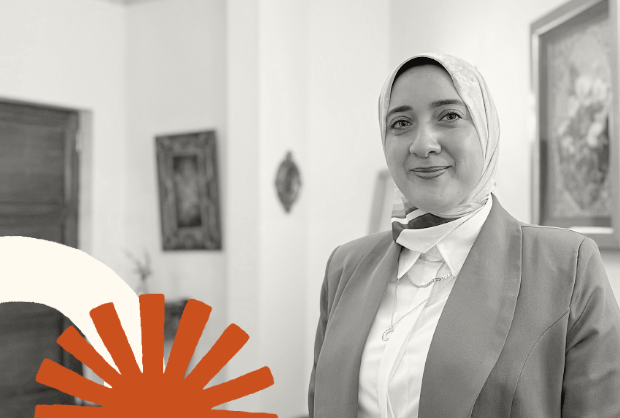
These same issues dominate panel discussions among researchers and politicians throughout the day. Speakers repeatedly stress that a fairer Personal Status Law is not a battle between men’s and women’s rights, but an improvement for all – especially children.
“How can our lives be governed by a law that is 100 years old? It denies rights – for men, women and children,” says Nashwa el Deeb, an Egyptian MP, during a panel debate.
CEWLA has spent years drafting a new Personal Status Law proposal. Nashwa el Deeb even gathered 60 signatures in parliament – enough for it to have to be debated in the parliament – but the presidency blocked her from presenting it.
She admits that there is a long road ahead, but remains cautiously optimistic: “I do now see more common ground between the government’s and CEWLA’s drafts. And the debate has shifted. At the beginning, colleagues warned me not to associate with such controversial ideas. But over time, many have come to me saying this legislation is vital. That shows progress.”
Change Must Start Locally
At the conference tables, young participants listen, nod and clap enthusiastically – sometimes cheering more than the typical crowd at legal or political conferences. Especially when a trainer from their workshops in one of the panels states that the power to create change lies with the youth.
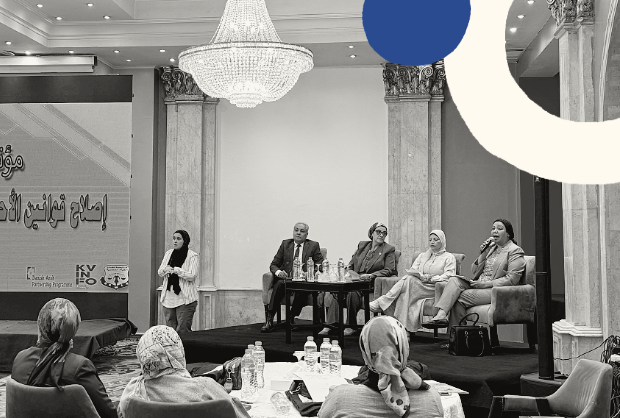
Several panelists, including Nashwa el Deeb, emphasise that reform requires not only new laws but also a local bottom-up approach.”By learning more, spreading ideas, talking to each other and changing attitudes in our communities,” she explains.
CEWLA and KVINFO
KVINFO has worked together with the Centre for Egyptian Women’s Legal Assistance (CEWLA) as a partner organization for over a decade.
The organisation provides legal aid, counselling, psychosocial support, mediation and litigation, primarily for poor and marginalised women.
Based on insights from its legal work, CEWLA also conducts awareness campaigns and advocacy to drive political change. It drafts recommendations for Egyptian legislation and runs campaigns. On Personal Status Law, CEWLA has developed a comprehensive proposal informed by the experiences of those discriminated against under current law.
The partnership is funded by the DAPP – Danish-Arab Partnership Program – under Denmark’s Ministry of Foreign Affairs.
Young attendees are eager to know their role, asking the panelists: How can we, as lawyers, push for change? What will it take to achieve a better Personal Status Law? How do we organise nationally?
‘It Resonates with People Our Age’
Meanwhile, they are already taking action.
“The key is spreading knowledge and examples of the law’s flaws. We’ve organised into groups – some focus on rural dialogue, others on universities, and some on social media,” says Yasmen Ahmed.
She recalls persuading a local woman to let her daughter study instead of marrying early even though her mother first thought that studies were for boys: “Today, that girl is enrolled in engineering. A small example, but it shows that dialogue and challenging fixed ideas can change things.”
Angelo Svafat has helped produce TikTok videos explaining the Personal Status Law and its gaps in practice. Each video has gained thousands of likes and hundreds of comments: “It’s clear that this topic and critique resonates with many young people. They write in the comments that they recognise the stereotypes and challenges from their own families and communities.”
Bringing New Perspectives to the Law Firm
Angelo is already applying his knowledge at work:
“I’m in training and see most lawyers in my office focus only on money. But I now look at women’s cases differently. I consider what life will be like after divorce – it’s about dignity and rights,” he says, adding that he also challenges colleagues to think beyond financial gain:
“It’s not just about women’s rights – it’s about the whole family and the children’s future. Lawyers can help uphold justice.”
Youth Dare to Dream Bigger
CEWLA’s Gawaher el Taher is amazed by the energy unleashed through these workshops:
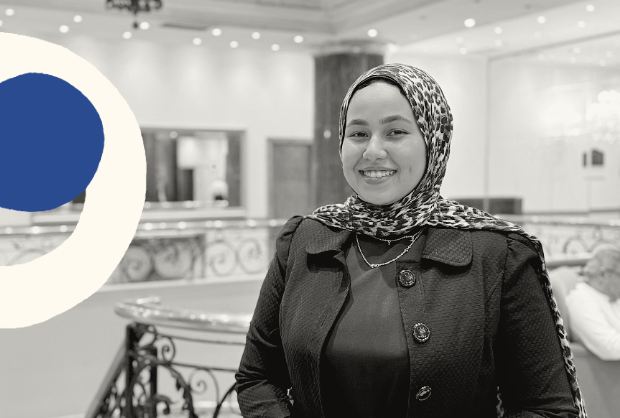
“The young participants are passionate, full of ideas and set ambitious goals. They launch initiatives locally and online, talk to families and friends about the law and how to improve it. They dream big and believe that change is possible.”
As the conference ends, the mood is emotional. Young participants join together to lift their trainers up in the air to thank them, dance, hug and shed a few tears.
Yasmen Ahmed knows change will take time, but remains hopeful: “I believe it makes a huge difference that we are now many future lawyers who want fairer laws. I hope it will, among many other things, improve custody rules.”
Angelo Svafat shares that hope:
“My dream is for the Personal Status Law to become fairer and more flexible – and for more Egyptians to see this is about basic rights,” he says, packing his bag.
Beside him, Rehab Nasser nods: “If I dare to dream big, I also hope that in ten years it will be easier for mothers to secure child support. It shouldn’t take so long to get the basics they need for their children.”

