

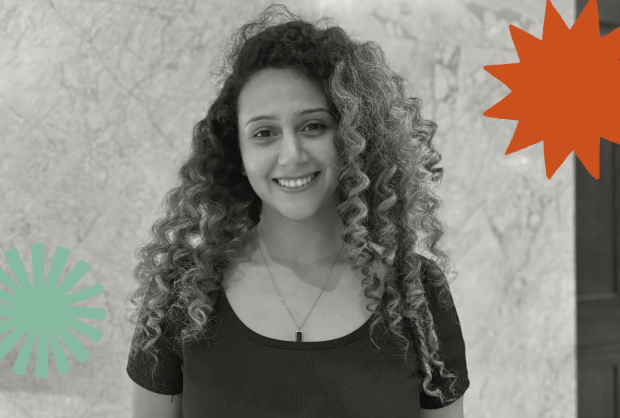
If Egypt is to become a more just and equal society, the movement must grow from the grassroots. That is the conviction of Mayar Mekky, who, together with dedicated volunteers, has founded a feminist school and network for women in Alexandria.
Her goal is to ensure that more young people know their rights, share experiences, and eventually engage in a movement for equality and justice.
“Knowledge is power,” she says, when it comes to challenging issues such as sexual harassment, gender-based violence, and patriarchal ideas about women’s roles and opportunities in society.
– What inspired you to start Bar Aman?
“I have personally experienced domestic violence. That was what made me want to open up and talk to other women about what happens in our homes, in our families – and that we should not accept it as normal.
That was my first motivation, because I felt how much it helped me and others to speak out. The second was that I wanted a space here in Alexandria where we could gather and share experiences, so it’s not all centred in Cairo.”
– What difference would such a community have made for you?
“I wish I had known what feminism was when I was younger. It would have meant so much. Of course, I would still have faced the same societal problems, but I would have known I wasn’t alone – and that it wasn’t my fault. I would have had the words to respond and the courage to act when I encountered sexual harassment.
Bar Aman
Bar Aman is a feminist initiative working to create safe spaces for women to learn about their rights and share experiences. It offers psychological and legal support to survivors of violence and refers them to further assistance.
Bar Aman aims to:
- Provide psychological and legal support for women
- Raise awareness of gender-based violence and women’s rights
- Strengthen Egypt’s feminist movement through knowledge and network
The feminist school and network primarily target young people aged 20–35. Bar Aman works broadly on equality and rights, and the goal is for both young men and women to participate.
I didn’t know it was harassment and sexism. I didn’t know it was oppression and violence. I didn’t know it was okay to think it was wrong. I didn’t know that countless other women experienced the same. But when I began writing openly on Facebook and connecting with other women, I realised this happens everywhere – and it’s not fair. We need to use our voices and speak out.”
– Why is there a need for a feminist school?
“We need more feminist leaders. Women in Egypt are incredibly brave, even in a context where so much is unspeakable and unchangeable. They just need space and solidarity. Especially in Alexandria, because most organisations working on equality and feminism are based in Cairo. Everything is centralised.
We need something here – and we need to build deep feminist knowledge among young people. Many are curious: students, researchers, young lawyers. We should know our rights and understand that generations of women before us have fought for equality. It’s vital that more of us learn about feminist waves and struggles, especially in the Middle East and the Global South.
At the school, we discuss feminist literature, history, and concepts – but also our own experiences and how they intersect with others in the Global South, and how capitalism shapes our lives. That knowledge and awareness is a weapon.
What do you mean by ‘knowledge is a weapon’?
When we talk about women’s rights, we’re often told it’s against the law, against religion, against society. It’s not. These are basic human rights. Knowledge is a powerful weapon to fight destructive misconceptions.
Problems like sexism, harassment, and domestic violence are often justified as God-given rights for men to discipline women – which is not true if you read the Qur’an. Knowledge helps us challenge these myths.
This knowledge shouldn’t stay within a closed circle. Participants go home and talk to their families, neighbours, and friends. Some start social media campaigns, volunteer with us, or launch their own initiatives. The school is not the end – it’s the beginning of a grassroots movement.”
– What social norms and taboos are you challenging?
“Everything from the idea that women should stay at home after marriage – or even before – to the notion that sexual harassment doesn’t exist or shouldn’t be spoken about. Norms about what women can or cannot do. And the shame surrounding women’s bodies, like menstruation. When we buy pads, they’re hidden in black bags. During Ramadan, we can’t eat in public or walk outside because we’re considered impure. It’s outdated and restrictive.”
Mayar Mekky
KVINFO met Mayar when Egyptian partners recommended her as a leading young feminist to represent Egypt at regional meetings on the Beijing Platform for Action.
These meetings, organised by KVINFO and UNESCWA for BPfA+30, involve civil society networks across Arab countries – primarily young feminists – in reviewing progress on the 30-year-old Beijing agreement on women’s rights.
– Isn’t it hard to make real change when feminism faces so much scepticism in Egypt?
“Yes, changing norms and securing rights takes time. But it can happen – especially when more of us speak out. The MeToo movement proved that. I remember a case of gang rape involving a wealthy, prominent Egyptian woman. It sparked a #MeToo wave in Egypt and encouraged many women to share their experiences of assault and harassment. We were furious. Social media exploded, and reporting cases became a major focus. I saw the impact on the streets.
During that time, a man my age harassed me physically and verbally, but his friend said: ‘Stop, they’re crazy right now – she’ll take you to the police.’ For the first time, I felt relief after an assault. They were afraid because women now knew how to report. We had rights.”
– What do you hope Bar Aman will achieve in the long run?
“If I were assaulted today, many would still blame me – ask what I was wearing, say it was my fault, warn me not to speak out because it would harm me or my family. I hope Bar Aman, alongside other initiatives, will help build a strong grassroots movement pushing for justice and structural change. I hope it means no woman will ever feel alone again: that many more will know and insist on their rights. We need to change both laws and mindsets. It’s a circular process.”

